
Thursday, February 14, 2013
Love Letters to Lee

Brian's Review of Life of Pi
Life of Pi: An Appreciation
Care
I love seeing
places I know in film. They feel like a secret shared between me and the movie,
a whispered "We know this place, you and I." Here, Ang Lee uses
recognizable locations in Pondicherry and Montreal in a way that maintains the
integrity of the local geography alongside the imaginary geography of the
story. He announces: Space matters and will be treated with care and attention
to detail.
Depth
3D is a spectacle
of depth attempting to deny the flatness of the screen. Objects are close or
far. They are in front of or behind. In moments of frenzied action, Life of Pi uses 3D in this way. More
often however, 3D is used to make empty spaces deep: air over flat water, light
on rippled water. Space expands quietly offering room for thought.
Unexpectedly, during
its most spectacular moments, the film arranges objects in the frame so as to flatten the image. A boat floats on a
black pool of brilliant stars; or it floats in a field of buttery light, sky
and sea indistinguishable except for the thin horizon drawn through the center
of the frame. These moments of flatness are announced as a compositional
strategy in the animal montage rolling under the opening credits, most
memorably in the picture of a bird and the flowering branches of a tree. The 3D
technology cuts the image’s foreground from its background, creating an
illusion of depth, but the photography cancels that illusion by composing its
subject in the manner of a silk painting.
The shallowness
of objects pitted against the depth of emptiness. This strategy is thematic. It
is also the only intellectual use of 3D technology that I have seen.
Love
The action of the
story is both constrained and enabled by the geography of the lifeboat and
raft. Distances between the raft and the lifeboat, between the front of the
lifeboat and its back are crucial here. The 3D underscores the distinction, and
here too, it is thematic. What after all is a dance between too close and too far
if not a love story? And this film is about nothing if not love.
Two images
capture that story for me. In the first, a tiger hangs to the edge of a
boat by a claw, desperate and lost. A young man, ax in hand and desperate too
to live, looks down from above and recognizes the tiger as real and alive and
worthy of care. In the second image, a tiger sits in a boat as night falls waiting
for the young man (who looks on from afar) to come back to their home.
Between these moments is a story of generosity and kindness given freely
until the giving becomes a habit and the habit a joy. That feels like a
definition of love to me.
Caitlin's Review of Life of Pi
-->
Poetry in 3D
by Caitlin Murphy
Prose writers
uncertain about cinematic adaptation would do well to trust their work to Ang
Lee. In Life of Pi, based on the novel of the same name by Yann Martel,Lee reveals again,
as he did so strikingly in Brokeback
Mountain, his deep integrity as a story-teller and sensitivity to source
material. What results is a film that is
visually glorious, entertaining and profoundly moving.
Pi, an Indian
teenager, is so named not as an allusion to math (we are told in playful
backstory) but to a famous swimming pool in France. He is voyaging to Canada with his family –
and the many inhabitants of their former zoo – when a massive storm strikes. As the sole human survivor of the shipwreck, Pi
ends up sharing a lifeboat with a Bengal tiger named Richard Parker, and must
devise ways to survive at sea with his impossible companion. As anyone who’s read the novel knows though, Life of Pi is actually the story of this
story, and an exploration of what it means for a story to be ‘true’. In a framing narrative adapted from the
novel, but adjusted for the film, a middle-aged Pi recounts his unbelievable
experience to a curious writer who has heard of his tale and sought him out to
hear it. Filmed in Montreal, mostly in the old Port,
these brief scenes add an extra little thrill for Montrealers.
To my delight, the
film is populated with essentially unknown actors. Having originally cast and filmed Tobey
McGuire as the listening writer in the framing narrative, Lee eventually
abandoned that footage feeling that McGuire’s star status detracted from the
centrality of the story. This strikes me
as one choice among scads of smart others that Lee made to protect and
priviledge Martel’s material. First-time
actor, Suraj Sharma, is compelling and forceful as Pi, especially given that he
spends most of the film not only acting opposite a non-human, but opposite a
non-flesh being even – 86% of the images of tiger Richard Parker were created
with CGI. To consider the amount of blue
screen work this entailed for Sharma, and the resultant workout his imagination
endured, is to find an evocative behind-the-scenes parallel to Pi’s own story.
At heart, like the
novel, the film is not so much about survival, as about storytelling and
faith. We don’t tell ourselves stories
because they’re true, but because they keep us intact. Pi’s memory of his near-death experience
serves as metaphor for the role of religion, but more generally his relationship
with Richard Parker also stands in for impossible situations of all kinds and
what we manage to do with them – an admission that life itself is essentially an
untenable proposition, full of suffering, pain, loss and fated from its
inception to end, that we negotiate as best we can.
At the ticket
counter, I grumbled shelling out extra money because the film was in 3D, and
even considered not seeing it. In my
limited exposure to the trendy gimmick, 3D has felt like a sad add-on meant to
vaguely “intensify” the film-watching experience; usually no one has taken the
time to think through what it’s actually supposed to be contributing to the
film beyond its own ‘trippy’ effect. Here,
its use is so refreshingly elegant, restrained, and thematically relevant, that
it actually felt integral to the story-telling.
The cinematography, heightened by the 3D effect, is so uniquely stunning
that water, animals, stars, trees appear re-invented, served up new again.
Indeed, the film’s
exquisite imagery made me feel like I’d been forgetting the sublime beauty of
the natural world – suddenly an animal’s colours, stripes, movements, whiskers
felt previously unseen or unimagineable.
Putting the audience in this naïve place of wonder is perhaps the film’s
single greatest achievement.
Watching Life of Pi is to be reminded of how very
much we have to marvel at. Which could
be a cheap, pat or cheesy lesson. Except
that it’s coming from Ang Lee, who is always doing something else altogether.
Sunday, January 27, 2013
The More Things Change
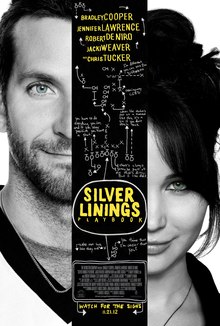
Brian's Review of Silver Linings Playbook
Genre in Bad Faith
by Brian Crane
So I wasn't going to watch Silver
Linings Playbook. I'd seen the trailer and was pretty sure that it would be
terrible. Then one day, I found myself heading to a theatre to watch this thing
with Caitlin as part of our Best Picture screening list. Sitting down, I was
genuinely confused: how could a trailer be so misleading? I quickly learned, it
wasn't.
This movie is clearly a romantic
comedy. But in what I take to be a bid for contemporaneity or seriousness, it
makes a big deal about cutting through the bull, getting real, and addressing
the problems of relationships today. The hard truth this film proposes is that a
lot of us are sick, diagnosable, requiring accommodation. To know each other,
the characters don't need to communicate. They just need to be brought up to
speed on their case histories. And so, in scene after bathetic scene, we listen
to unpleasant characters announce their diagnoses to each other as if these
constituted personalities. "I AM" he says. "I AM" she says. "I AM" he says. And
so on and so on. And who cares?
For all it's self-importance, this
approach to character is much more simplistic than the approach native to
romantic comedies of the classic 1930s sort. Watch Bringing Up Baby or
The Philadelphia Story or It Happened One Night and you'll see
movies about adults made for adults. They have happy endings, yes. But these
movies earn those endings in complicated and emotionally complex stories that
transform their characters and launch them forward into life. Nothing in
romantic comedy--the cinematic genre most closely related to the theatre of
Shakespeare--is simple or easy. It only seems that way because we want so badly
for its faith in us to be true.
Silver Linings Playbook may
believe its view of humanity is smarter and truer than romantic comedy's, but in
the end, it can't pull off the picture it wants to paint. "I AM" plus "I AM"
doesn't equal "we." And so in it's final moments, the movie generates the
romantic closure it seeks by embracing (without avowing) the romantic genre it
has worked so hard to repudiate. Out of the blue, this movie about him saying "I
AM sick, that's just me," and her saying "I AM (not) a slut, deal with it,"
becomes a movie about a dance competition, one part Strictly Ballroom,
one part Little Miss Sunshine. Untrained, outclassed and with all of the
family's fortunes on the line (don't ask), the characters decide to try their
best, dance their hardest, and in the end, against all odds, discover they can
do it if they just let go and have fun. The family fortune is saved, and the
two, now lovers, find each other and kiss in the empty nighttime streets, happy
finally together.
I think this movie wants to update a
genre. It wants to make those silly, old-fashioned movies take account of what
we "know" today about human experience. How after all, if so much of what we
feel and experience is actually symptomatic of illness, can you find love? It is
telling (and reassuring) that the movie can't offer an answer any different than
the established generic answer. That four-hundred year old tale of marriage
delayed but achieved through work and conversation still rings true to our
experience and aspirations. The tangle of diagnosis this film takes as our lot
does not.
…and yet, all those awards and
nominations…
Something in us wants to believe in
the new story of sick people this movie can't figure out how to tell. And that's
terrifying.
Caitlin's Review of Silver Linings Playbook
Like a Lead Balloon
by Caitlin Murphy
A few years back, the Best Picture Oscar
category was expanded from a list of 5 nominations to a maximum of 10. The change seemed to have merit: create room for the less conventionally epic,
the more comedically inclined, the smaller budgeted – or otherwise just somehow humbler – cinematic offerings
to enter the fray. It’s a move that’s
allowed the Oscars to embrace such gems as this year’s Beasts of the Southern Wild, which might otherwise have fallen off
the radar. But it’s also a move that’s
backfired, letting in riff-raff like Silver
Linings Playbook. Written and directed
by David O. Russell (The Fighter) and based on the novel by Matthew Quick, the
film is a warmed-over rom-com that manages mediocrity at every turn.
Set in Philadelphia, the film opens
with Pat Solatono (Bradley Cooper) being released from a mental health
institution where he’s been staying since a breakdown 8 months ago. He comes home to live with his football-obsessed
father (Robert DeNiro) and snack-making mother (Jackie Weaver), armed with a
new determination to always find life’s silver linings (why haven’t other
bi-polar sufferers come up with this yet?). Pat strategizes to re-establish his life,
regain his job, and win back his wife (currently holding a restraining order
against him). Out for a run one day, he
meets Tiffany, a sultry, recently-widowed 20-something, who’s been
self-medicating with sexual promiscuity.
In exchange for getting Tiffany to hand-deliver a letter to his wife (not
sure why the American postal service wouldn’t work), Pat agrees to be Tiffany’s
partner for a dance competition. And thus
the bumpy wheels of the ‘romantic’ plot are put into crunchy motion.
In the vein of As Good as It Gets, the film attempts that awkward blend of actual mental
illness (as opposed to mere personality quirk) with light romantic comedy,
trotting out that old chestnut that true love can fix any noggin. It seems the only recent revision to this rom-com
narrative of “fucked up guy, meets redeeming girl who saves him from himself” is
“fucked up guy, meets similarly fucked up
girl, who saves him from himself.” Equality
at last.
Pat’s behaviour though never quite
feels ugly or complicated enough to do service to the reality of serious mental illness. His capacity for violence is typically tied
to ethical outrage: his initial
breakdown, for instance, resulted from discovering that his wife was having an
affair and losing it on his romantic rival.
Well, who wouldn’t do that, right?
At least a bit. And once he’s out
in the real world again, the only time Pat’s violent rage re-surfaces is when
he defends his Indian therapist from a bunch of racist football fans. Awww.
Focusing also on Pat’s father’s OCD-like
behaviour surrounding his beloved football, as well as his own history of
violence (he’s banned from stadium games), the film seems interested in
suggesting that we’ve all got our own case of the ‘crazies’ and some are just
more official than others. But it’s a
theme that never really gathers much momentum, and limply lies on the ground by
film’s end.
To return to the Oscar noms, the film
also somehow wound up in the undeservedly distinguished company of films like A Streetcar Named Desire and Who’s Afraid of
Virignia Woolf with nominations in all four acting categories (leading and
supporting). Bradley
Cooper, (who no matter what he does in his career I will always comfortably
reduce to ‘that guy from The Hangover’)
demonstrates precisely why he’s always expressing red-carpet bafflement to have
found himself with an acting career. His
performance is so much fluff. As for
Jennifer Lawrence, I like her – her
husky voice, solid build, no-nonsense posture, Juliette Lewis-like snark. She had me at Winter’s Bone and it will take quite a bit to undo that love at
first sight. But she’s wasted here. One-note and predictable.
When Pat’s father loses a huge football
bet that he wagered based on a rabbit’s foot faith in Pat, everyone rallies
around to help him. What follows is a
long, sloppy scene in which the players plot out an elaborate parlay bet to win
back his money by pairing up the results of a football game with those of Pat
and Tiffany’s dance competition. The
scene was reminiscent of a bunch of squabbling screenwriters sitting around
past midnight trying desperately to figure out how to ‘end this thing.’ And this is exactly what the film felt like
far too often – watching what the filmmakers were ‘trying’ to do, the awkward plot-making
machine churning away.
And the bow that ultimately wraps up
this turd? A boy-girl chase scene that
ends with a kiss in the middle of the street.
Of course. Like every other
moment in Silver Linings Playbook, it’s
precisely something you’ve seen before, or else something that vaguely stinks
of it. The entire film lacks texture and
specificity, and when it does manage to scrounge some up, the results are so
contrived and self-conscious, that it might as well have crept back to its
sleepy den of cliché.
Tuesday, September 11, 2012
Of Buddies and Beasts

My original buddy, Brian, is back for this one and hopefully many more. We knew pretty little about Beasts of the Southern Wild going in, which meant for that much more to delightfully stumble upon. Enjoy!
Brian's Review of Beasts of the Southern Wild
Beasts of the Southern wild is wonderfully strange and ambitious.
It's odd then to write about the film's influences. It can even look like avoiding a difficult film. Yet, watching it, I couldn't shake the sense that this movie was consciously setting itself in relation with two of contemporary cinema's most idiosyncratic and philosophical filmmakers: Terrence Malick and Werner Herzog. What's more, the film's final act seemed to offer an alternative vision of the world. So in a clumsy way, here is what I'm thinking about (still) in response to this movie.
First Malick, the more overt influence. In Beasts as in Days of Heaven, a young girl with a nearly incomprehensible accent narrates in voice-over a tale of adult relationships. Her voice is naive but philosophical. By narrating a story that is beyond her, she makes the relationships less familiar, more visible, and she comes of age. Stylistically, Malick's influence is strong: the subjective camera that parallels the child's point-of-view while maintaining one of its own; the lyricism of the imagery; the interest in natural landscapes; all of these are emblematic of Malick's recent films. The allegorical side-story of the prehistoric animals and the numerous handheld, shallow-focus close-ups could have come directly The Tree of Life. However, Beasts is very different from Malick's films in that it is less abstract, less sure that things will work out, less certain that God (of some sort) is in his heaven and all is well.
Second Herzog, a set of references that are more specific and less overt. In fact, I've wondered if they are there at all. But the more I think about them, the more I'm convinced that the final scenes of Aguirre: The Wrath of God are the proper context for thinking about the muddy, boat-centered lives of the people of the Bathtub. The only thing missing is monkeys. If you aren't sure what I'm referring to (or know and think I've lost it) watch this clip and this one.
I take the visual references to be plain. So the question becomes how Beasts' ideas about human life in a savage environment compare to those of Herzog's. It seems to me that Beasts flips the moral and ethical terms of Herzog's film on its head. Aguirre is mad, powerhungry and, despite all evidence to the contrary, confident of his superiority to the natural world. His death reveals his folly. In Beasts, the people on the boat are humble, generous and aim to live happily within the natural world. Their lives reveal an odd wisdom. The modern Aguirres (and they have become legion) live behind the levee, a concrete wall that pins nature in and drowns it. If Aguirre speaks to the danger of reaching impossibly high, Beast tells of the danger of sitting quietly in the world (but outside the system).
In the final act, I think the film leaves these sources behind and offers a very different and very old vision of the human condition. Here the concrete, unabstracted poor (who we see so little in contemporary film) live in a different world. Their lives are confusing because they are not presented as failed immitations of our own lives or as interestingly different lives that enrich our experience. They live lives that respond to, reject and denounce the sterile and, yes, lifeless choices we make every day. They are kings of their own kingdom, live their own lives. And life is a holiday. In short, they are carnival figures celebrating the return of physical life, nature, eating, drinking, sex, community, all the things we pretend we can buy at a market but can't. This vision is neither as complacent as Malick's nor as bleak as Herzog's, but it is no less philosophical and no less challenging. What it shares with these other films, however--and this is troubling, really troubling--is an oddly medieval anti-modernism.
As I left the cinema, these were the pieces of thoughts I had floating around in my head. They don't cohere much more now than they did then. But they interest me and hint at what makes this move one of the most exciting and smartest American movie I've seen in quite awhile.
Caitlin's Review of Beasts of the Southern Wild
Beautality
by Caitlin Murphy
by Caitlin Murphy
Walking into Beasts of the Southern Wild, I knew
about as little as one can know about a film before seeing it. I had glimpsed the poster image. And what I thought I saw was the back-lit silhouette
of a long-armed alien. The alien turned
out to be Hushpuppy, a 6-year old black girl, running through the woods,
holding fire-crackers, and trailing sparks behind her. And from the film’s opening images – Hushpuppy
alone, wearing boy’s briefs and rubber boots, playing in the mud and pressing
little animals to her ear in attempt to hear their thoughts – I knew I was a
stranger in an endearingly strange land.
Beasts of the Southern Wild, directed by Behn Zeitlin, who co-wrote the
screenplay with his friend Lucy Alibar (based on her play Juicy and Delicious), is a sort of dark fantasy set off the shores
of Louisiana in an area known to its residents, as “The Bathtub”. Hushpuppy and her hardened father, Wink
(Dwight Henry), live in separate raised trailers, surrounded by their animals (some
pets, some dinner). When a massive storm
descends on them, “The Bathtub” is flooded; the few who remain alive join
together, as survival become an even more brutal game. This impromptu family is
also filled with caring and kindness though, and lessons abound about always
watching out for the littlest ones among us.
As Hushpuppy intuitively knows with her animals – we must listen hardest
for the voices we can’t hear.
The mise-en-scene
in Beasts of the Southern Wild is
itself a filmmaking feat. With so many
locations, so much water(!), and such crazily cramped and dilapidated spaces,
the attention to detail is remarkably evocative. One couldn’t help but wonder how much of the
rich environments was already in situ and how much was staged. And with half the cast hailing from Louisiana
bayou country, the sense of place in the
film is intimately drawn and acutely felt.
The real-life images of Hurricane Katrina’s aftermath, as well as those
of other recent disasters, of course, hang awkwardly in the air.
The levee that
separates ‘civilized society’ from “The Bathtub”, protecting it from the flood,
serves in the film as a metaphorical divide between those aware of nature’s
dominance, and those who naively seek to obliterate it. And through Hushpuppy’s imaginings of massive
icebergs crumbling, and pre-historic beasts grunting back to life, we are
reminded that our sense of control over nature is illusory, and that we are
heading for a painful wake-up call to that effect. In this sense, a central tenet of the film
seems to be, very broadly, that a reckoning is coming.
As the young Hushpuppy,
the even younger Quvenzhane Wallis (her mother brought her to audition for the
film at 5 years old, even though the call for actors said they had to be 6) is
fiery, vulnerable, and eerily present.
Her father calls her ‘man’ and fervently drills into her his most
treasured life-lessons– how to rip a crab apart (‘beast it!’), flex one’s
muscles, and not ever ever cry – and Hushpuppy goes toe-to-toe with him just as
he implores her to. She doesn’t so much
try to match others though, as she does to meet them.
In one of the
film’s most striking moments, Hushpuppy scribbles images of her life on a cardboard
box that she hides under, as a self-set fire threatens to engulf her in her
trailer. Having learnt about cave
drawings at school, she wonders how she will be remembered, deciding that if
her life can’t be saved, then at least her story can be. She asks how her existence, her father’s, and
their time in “The Bathtub” will be made known to outsiders and
descendants. And in this sense, Beasts of the Southern Wildis
overtly political: Hushpuppy marches against the tendencies of history and dominant
culture to shore up some stories and let others wash away. The film is an indictment of our strange ability
to ignore so many real lives lived.
Beasts of the Southern Wild is Court 13’s first feature-length film. Clearly, like its heroine, the company is
young, small and mighty.
Thursday, July 26, 2012
New (England) Found Passion
Joel's Review of Moonrise Kingdom
PUPPY
LOVE IN THE MOONRISE
KINGDOM
joel fishbane
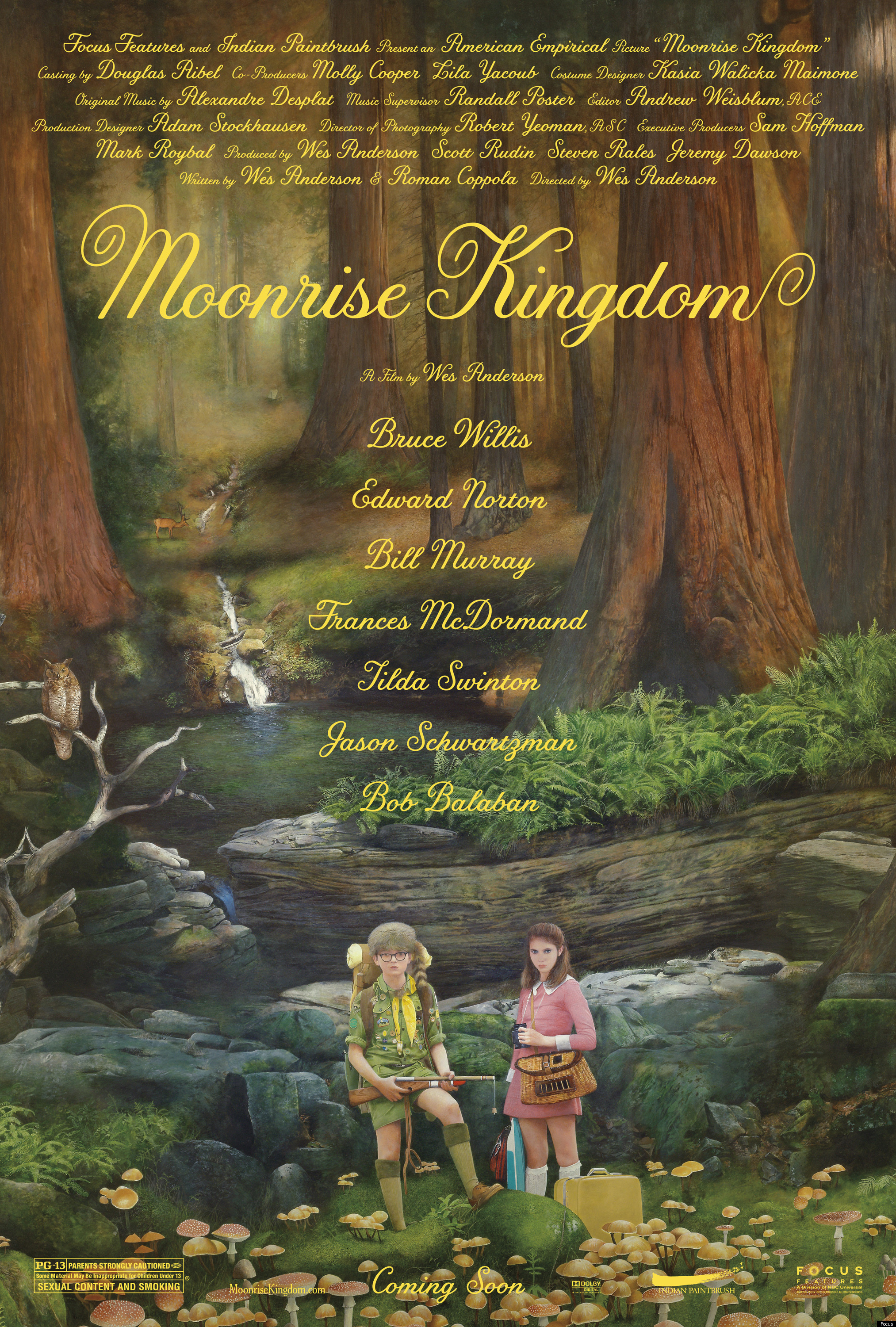
One day, some film class will study Moonrise Kingdom Anderson Anderson
Caitlin's Review of Moonrise Kingdom
Ride on into Sunset
by Caitlin Murphy
by Caitlin Murphy
It’s a testament
to the iconic quality of Wes Anderson’s work that any filmmaker who even
touches dysfunctional families, precocious children, or pasty, ineffectual
adults, risks courting comparison. Anderson’s
got a patent on a particular brand of quirk, and he never strays too far from
his bread and butter. Though Moonrise Kingdom fits snugly in his
library, it doesn’t quite earn its keep.
Wednesday, June 13, 2012
Absence and Hunger

Caitlin's Review of Hunger Games
Surprised and Sated
by Caitlin Murphy
I had made a vague, but deeply felt decision about The Hunger Games before I even walked into thetheatre. Something about hating it. My conclusion was based on a few previews, but also my sad suspicion that Jennifer Lawrence – who I’d adored in last year’s stirring film Winter’s Bone – was about to cash in her chips in yet another hyped-up book-to-blockbuster orgy.
Sometimes
it’s so lovely to be wrong.
Monday, March 5, 2012
Down, Down, Down
 I'd been hoping for a long while to get my mentor-cum-friend, Sarah Stanley, to blog-buddy with me, but always felt badly adding more static to her already very busy brain. Thrilled that she was able to join me for The Descendants. Enjoy.
Sarah's Review of The Descendants
A woman is water-skiing. The screen cuts to black and the credits and music that will dog us through The Descendants starts up. The opening shot is both stark and nostalgic: the face of a woman expressing an irrepressible joy from living a reckless moment perfectly. It feels like it is being shot by a loved one, the lighting is not quite right, the white balance seems off, the angle odd, a little too intimate somehow.
Caitlins Review of The Descendants
Ice Cream Headache
a review by Caitlin Murphy
a review by Caitlin Murphy
If ever you are watching a film, and a character gazes out his airplane window and claims, in voice over narration, that it makes sense he lives in Hawaii because his family is like an archipelago – you are probably not in very good cinematic hands.
Monday, February 13, 2012
A 20th Review

Enjoy our takes on David Cronenberg's latest offering...
(Oh yes, and as per the heading, this is also the 20th film reviewed on this blog, which launched last February 6th.)
Ken's Review of A Dangerous Method
by Ken Ludlow
Early on during my first psychotherapy, which was psychodynamic but neither Freudian nor Jungian in the strict sense of those terms, I asked my seasoned therapist what the main difference was between undergoing a Freudian and a Jungian analysis. After a brief pause he replied, “Well, if a guy were to undergo a successful Freudian analysis he would probably still feel a bit nuts but he’d actually be doing quite well. If he were to complete a Jungian analysis he’d think he was one of the sanest men on the planet but he’d still be really nuts.”
Caitlin's Review of A Dangerous Method
A Sure-Fire Plan
by Caitlin Murphy
by Caitlin Murphy
From the opening images of A Dangerous Method – the usually sedate Keira Knightley thrashing against the confines of a horse-drawn carriage, destined for an asylum – we are thrown into a world preoccupied with the tension between chaos and control; a world blinking its eyes open to the big, new ideas of psychoanalysis. Directed by David Cronenberg, a man typically drawn to the dark, deep and disturbed, the film, though eminently watchable, is quite a lot subtler and safer than its title or director’s name might imply.
Subscribe to:
Posts (Atom)